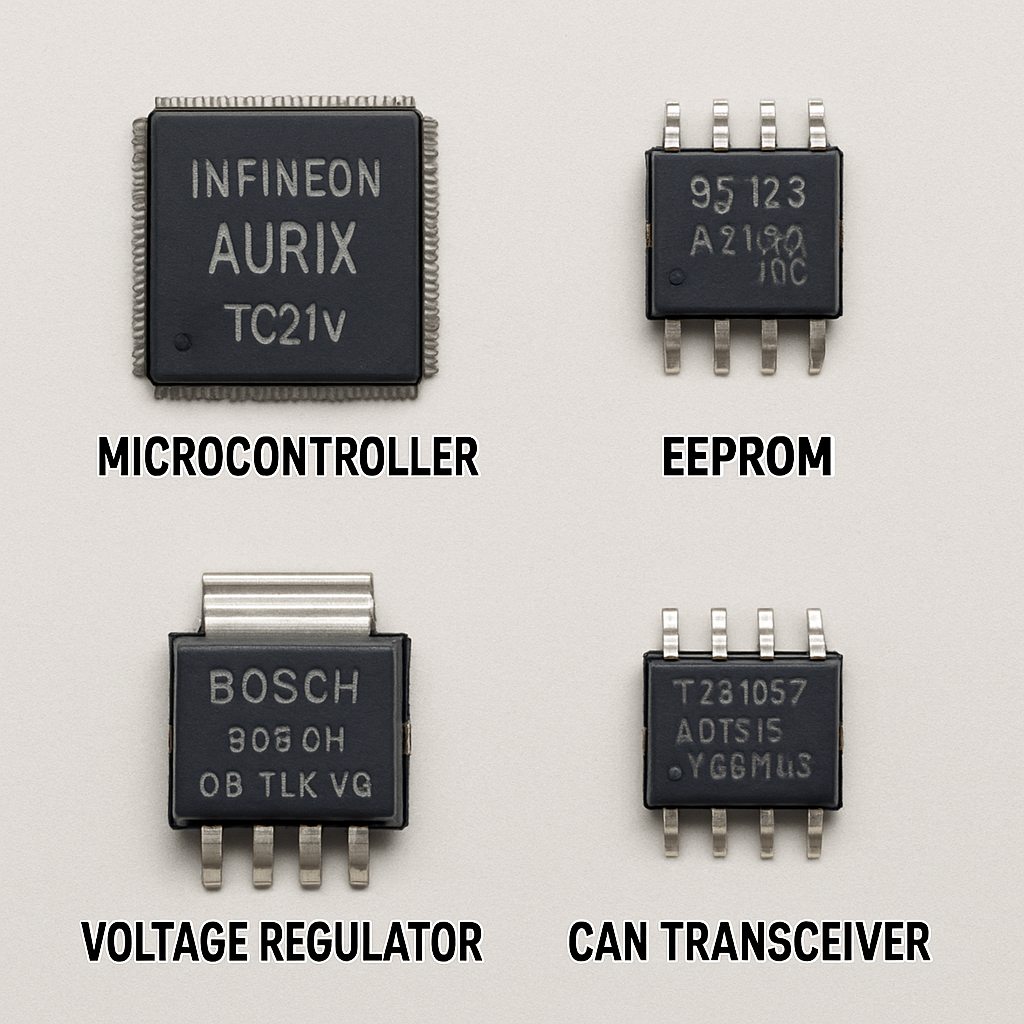
In the modern automotive industry, electronic components play a pivotal role in ensuring engine performance, fuel efficiency, and vehicle reliability. Among these essential components, the Car EEPROM IC stands out for its ability to store critical data and facilitate seamless communication between various vehicle systems. This integrated circuit is at the heart of modern engine management, providing reliability and precision in every driving condition.
The Car EEPROM IC is a specialized memory chip used in the vehicle’s ECU (Engine Control Unit) to store non-volatile data. This includes engine parameters, fault codes, calibration settings, and operational logs. Unlike standard memory, EEPROM retains its data even when the vehicle is powered off, making it indispensable for maintaining accurate engine performance, diagnostics, and adaptive learning functions.
What Is a Car EEPROM IC?
EEPROM stands for Electrically Erasable Programmable Read-Only Memory. In automotive applications, the Car EEPROM IC stores critical information that allows the ECU to monitor, adjust, and optimize engine performance.
This IC is different from regular volatile memory because it retains information even without power. It ensures that calibration settings, fuel maps, and diagnostic trouble codes are preserved for consistent engine operation. This non-volatile storage is especially crucial for modern vehicles that rely on adaptive engine management, as it allows the ECU to “remember” prior conditions and adjust performance accordingly.
How the Car EEPROM IC Works
The Car EEPROM IC interacts directly with the ECU and other sensors within the engine management system. It records and stores a wide range of data points, including:
- Engine speed and load conditions
- Fuel injection timing and volume
- Ignition timing adjustments
- Fault codes and error logs
- Adaptive learning values for improved performance
When the ECU needs to make decisions regarding fuel delivery, ignition, or throttle response, it accesses the data stored in the EEPROM IC. This allows the engine to respond dynamically to changing conditions, maintain optimal performance, and prevent potential damage.
For instance, if the engine has experienced repeated high-load conditions, the EEPROM IC stores these operational logs. The ECU can then adjust fuel maps or timing parameters to prevent excessive wear or overheating, ensuring smoother and more reliable operation.
Benefits of a Car EEPROM IC
Integrating a Car EEPROM IC into a vehicle’s ECU system provides several advantages:
- Reliable Data Storage: Non-volatile memory ensures critical engine data is preserved even when the car is turned off.
- Improved Engine Performance: Stores calibration and adaptive data that allows for real-time optimization.
- Enhanced Diagnostics: Maintains a record of fault codes and error logs for easier troubleshooting.
- Fuel Efficiency: Adaptive learning capabilities allow the ECU to optimize fuel usage based on past performance.
- Extended Engine Life: Proper data management reduces the risk of misfires, inefficient combustion, and mechanical stress.
These benefits make the Car EEPROM IC an indispensable component in modern automotive electronics.
Applications of Car EEPROM IC
Car EEPROM ICs are versatile and can be found in a variety of automotive systems:
- Engine Control Units (ECU): Stores calibration data, fuel maps, and ignition timing settings.
- Transmission Control Units (TCU): Maintains adaptive shift patterns for smoother transmission performance.
- Anti-lock Braking Systems (ABS): Records operational history for enhanced safety and responsiveness.
- Airbag Modules: Stores crash event data for accurate post-collision analysis.
- Infotainment Systems: Keeps user settings and system logs for enhanced convenience.
By enabling precise control and reliable data storage, Car EEPROM ICs contribute to overall vehicle safety, efficiency, and performance.
Common Signs of a Failing Car EEPROM IC
Although EEPROM ICs are highly reliable, they can occasionally fail due to electrical surges, heat, or age. Symptoms of a failing Car EEPROM IC include:
- Loss of stored engine calibration data
- Random engine misfires or poor performance
- Persistent warning lights on the dashboard
- Inconsistent fuel efficiency
- Difficulty in reading or writing diagnostic data
Detecting EEPROM issues early can prevent serious engine problems and ensure continued safe operation.
Installation and Maintenance Considerations
Installation of a Car EEPROM IC generally requires specialized knowledge and professional tools. Replacing or reprogramming the chip involves careful handling to avoid data corruption or damage. High-quality ICs from trusted manufacturers are recommended for consistent reliability.
Regular maintenance, including ECU diagnostics and software updates, helps ensure that the EEPROM IC continues to function correctly. Avoiding electrical surges and extreme heat exposure can also prolong the lifespan of this crucial component.
Performance Tuning with Car EEPROM IC
Car EEPROM ICs are not only used for storage but also for performance tuning. Skilled technicians can adjust fuel maps, ignition timing, and other engine parameters stored in the EEPROM to optimize performance, enhance fuel efficiency, or adapt the engine for specific driving conditions.
Professional tuning ensures that these adjustments do not compromise engine reliability or exceed safety limits. With the right expertise, Car EEPROM ICs can unlock the full potential of modern engines, making them more responsive, efficient, and powerful.
Future of Car EEPROM IC in Automotive Technology
The future of Car EEPROM ICs is closely tied to the advancement of intelligent engine management systems:
- AI Integration: ICs that adapt engine settings based on driving habits and real-time conditions.
- Predictive Maintenance: Storing operational data to predict and prevent potential failures.
- Hybrid and Electric Vehicle Integration: Coordinating multiple power sources for optimized efficiency.
- Enhanced Diagnostics: Providing more detailed logs for faster troubleshooting and repairs.
As vehicles become smarter, the role of Car EEPROM ICs will continue to expand, ensuring optimal engine performance and reliability in increasingly complex automotive systems.
Conclusion
The Car EEPROM IC is a vital component in modern engine management systems, providing non-volatile storage for essential data and enabling adaptive, efficient, and reliable vehicle performance. By working closely with the ECU, it ensures precise control over fuel injection, ignition timing, and other critical parameters, while maintaining a record of operational history for diagnostics and optimization.
Whether for daily commuting, performance tuning, or hybrid vehicle management, the Car EEPROM IC enhances engine efficiency, prolongs component life, and supports smarter, more responsive automotive systems. Proper installation, maintenance, and tuning allow drivers to maximize engine performance while ensuring long-term reliability.
