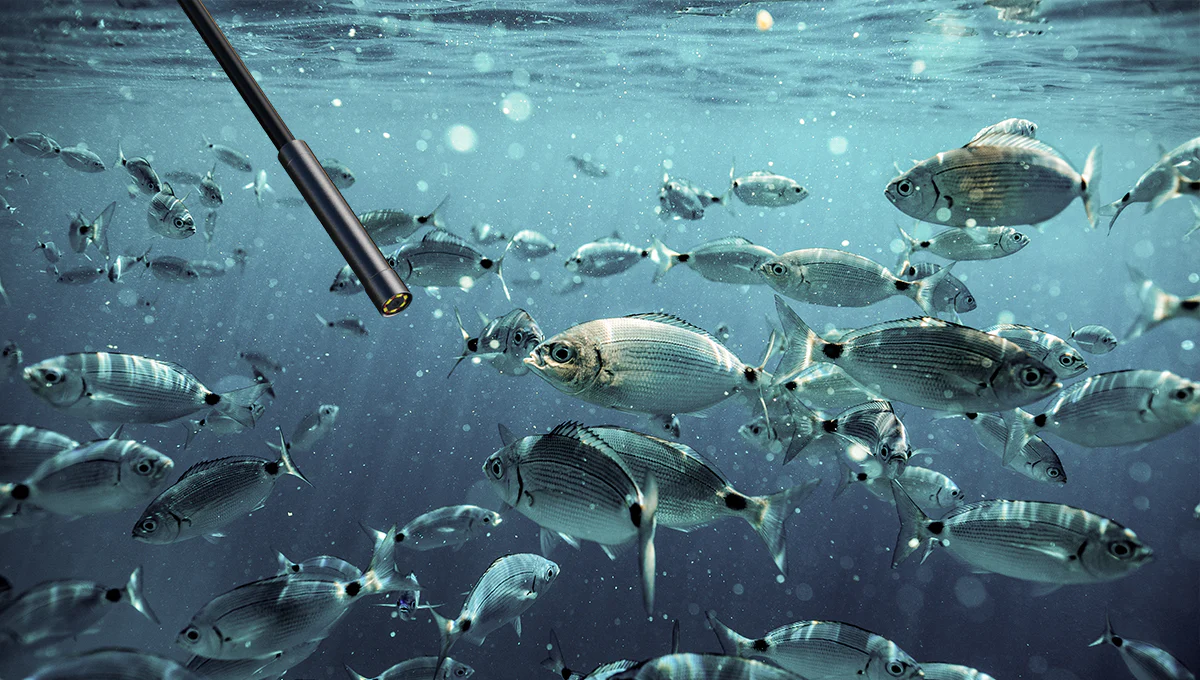
Environmental studies often require detailed observation of aquatic ecosystems to monitor biodiversity, assess habitat conditions, and evaluate the impact of human activities. Traditional methods, such as direct diving or net sampling, can be time-consuming, invasive, or limited in scope. To address these challenges, researchers increasingly rely on specialized technology that allows for non-intrusive, detailed observation: the underwater inspection camera.
By providing clear visuals of submerged environments, an underwater inspection camera enables scientists to study ecosystems with minimal disturbance. It offers a safe and efficient way to gather data on marine life, underwater vegetation, and physical structures such as coral reefs or riverbeds. The use of such devices has become integral to modern environmental research, improving both the accuracy and scope of studies.
Monitoring Marine Biodiversity
One of the primary applications of underwater cameras in environmental studies is the monitoring of marine biodiversity. Researchers can track species population, observe feeding behaviors, and document interactions among different organisms. Unlike traditional sampling, which may harm the environment or disrupt animal behavior, cameras provide a non-invasive solution that captures natural patterns in situ.
Assessing Habitat Health
Environmental scientists also use cameras to evaluate the condition of aquatic habitats. Coral reefs, seagrass beds, and freshwater ecosystems can be examined for signs of stress, disease, or degradation. Clear footage allows researchers to identify issues such as coral bleaching, sedimentation, or invasive species, enabling timely intervention and conservation planning.
Mapping and Documenting Ecosystems
Accurate documentation is critical in environmental studies. Underwater cameras help create detailed visual maps of ecosystems, including the spatial distribution of species and the layout of physical structures. These recordings can be used to track changes over time, providing essential data for long-term monitoring projects and comparative studies.
Supporting Environmental Impact Assessments
Construction, industrial activities, and urban development can significantly affect aquatic ecosystems. Underwater inspection cameras are valuable tools for environmental impact assessments, allowing teams to observe and record potential effects before, during, and after such activities. Visual data captured by cameras helps stakeholders make informed decisions and develop mitigation strategies to minimize environmental damage.
Facilitating Long-Term Research
Long-term monitoring is often required to understand trends and changes in ecosystems. Cameras can be deployed for extended periods, capturing continuous footage and ensuring that transient or rare phenomena are documented. This capability is particularly useful for studies on climate change, migration patterns, or the life cycles of aquatic organisms.
Enhancing Safety and Accessibility
Many aquatic research sites are located in areas that are difficult or dangerous for divers, such as deep-water regions, fast-flowing rivers, or contaminated sites. Using an underwater camera allows researchers to access these areas safely, reducing risk while still obtaining valuable data. Remote operation and real-time viewing further increase the efficiency and reach of environmental studies.
Data Analysis and Reporting
Footage from underwater cameras can be analyzed to extract quantitative and qualitative information. Researchers can identify species, measure habitat dimensions, and assess environmental conditions with precision. Additionally, visual documentation supports scientific reporting, regulatory compliance, and public outreach efforts by providing clear, compelling evidence of findings.
In conclusion, the underwater inspection camera plays a critical role in environmental studies by enabling non-invasive monitoring, detailed habitat assessment, and accurate documentation of aquatic ecosystems. Its ability to capture high-quality visuals in challenging underwater conditions makes it an indispensable tool for researchers, conservationists, and environmental managers seeking to protect and understand aquatic environments.
