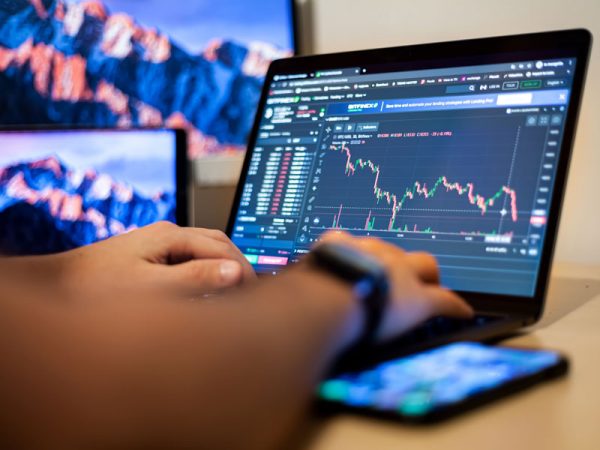
Financial markets have a way of challenging assumptions.
Before people begin learning what is forex trading, they often develop ideas about how trading works. Some believe success comes from predicting market movements accurately. Others assume that experienced traders always know what will happen next. There are also those who think trading is primarily about finding the perfect strategy and applying it repeatedly.
The early stages of learning usually reveal something different.
Many of the most valuable lessons have very little to do with predicting the future and far more to do with understanding how markets behave. These lessons often appear gradually, yet they can shape a trader’s development for years to come.
Knowledge Versus Understanding
One of the first comparisons new traders encounter is the difference between knowing information and understanding it.
Learning the basics of what is forex trading is relatively straightforward. Traders can discover how currency pairs work, learn common terminology, and understand how trades are placed. These concepts form an important foundation.
However, understanding the market requires something more.
A trader may know that economic data can influence currencies, but understanding how the market reacts to that data is often a separate challenge. There are times when strong economic figures lead to rising prices and other times when the same type of news appears to have little effect.
This can be confusing at first.
The reason is that markets do not react solely to events. They also react to expectations. If traders have already anticipated a positive outcome, the actual announcement may produce a very different reaction from what a newcomer expects.
This lesson encourages traders to think beyond headlines and look more closely at the broader market environment.
Activity Versus Progress
Another important lesson involves the difference between doing more and learning more.
New traders often feel that constant activity is the fastest route to improvement. Watching charts for hours, analysing every market movement, and searching for opportunities throughout the day can feel productive.
Yet many experienced traders eventually discover that activity and progress are not always the same thing.
A trader who spends time reviewing decisions, analysing mistakes, and understanding market behaviour may learn more than someone who simply increases the number of trades they take.
This realisation can be surprisingly valuable.
Instead of measuring progress by how busy they are, traders begin measuring progress by how much they understand. The focus shifts away from constant action and towards continuous learning.
For people exploring what is forex trading, this can be one of the most significant changes in mindset.
The goal is no longer to participate in every opportunity.
The goal becomes developing the knowledge and judgement needed to evaluate opportunities more effectively.
Certainty Versus Adaptability
Perhaps the most important lesson involves expectations.
Many people enter trading searching for certainty. They want clear answers, reliable predictions, and methods that remove uncertainty from the process.
Financial markets rarely provide those things.
Currencies are influenced by economic developments, political events, market sentiment, and countless other factors. Even the most experienced traders cannot know exactly what will happen next.
At first, this uncertainty can feel frustrating.
With experience, however, many traders begin viewing it differently.
Rather than searching for certainty, they focus on adaptability. They learn how to interpret information, assess changing conditions, and make thoughtful decisions despite not having all the answers.
This shift often marks an important stage of development.
Adaptability allows traders to respond to new information without becoming overly attached to a single expectation. It encourages flexibility, patience, and a more realistic view of how markets operate.
The interesting thing about these lessons is that they remain relevant long after the beginner stage has passed. Markets evolve, technology changes, and trading styles come and go, but the principles themselves continue to matter.
Understanding is more valuable than simply collecting information.
Progress is more meaningful than activity alone.
Adaptability often proves more useful than certainty.
For anyone learning what is forex trading, these lessons provide a foundation that extends beyond individual strategies or market conditions.
They help create a mindset that supports long-term growth and a deeper appreciation of how financial markets really work. Many traders spend years refining techniques and exploring new approaches, yet they often return to these same lessons because they continue to influence decision-making throughout their journey.
