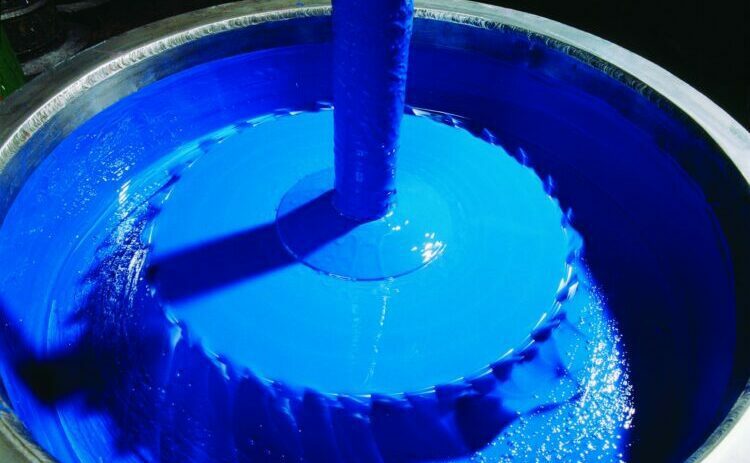
In modern coatings manufacturing, consistency and production efficiency are two of the most important performance indicators. Whether producing industrial coatings, decorative paints, or automotive finishes, manufacturers must ensure that every batch meets strict quality standards. This requires tightly controlled processes and well-integrated equipment across the entire production workflow.
A well-designed Paint Production Line plays a central role in achieving stable quality and high output by combining multiple processing stages into a unified system. Paint Production Line solutions help manufacturers maintain uniform dispersion, reduce variability, and improve overall production efficiency in large-scale paint manufacturing.
Standardized Processing Improves Batch Consistency
One of the main reasons production lines improve consistency is standardization. When each stage of production follows fixed parameters, variations between batches are significantly reduced.
This includes:
- Controlled raw material dosing
- Consistent mixing speeds and times
- Standardized grinding and dispersion settings
By eliminating manual inconsistencies, manufacturers can achieve stable and repeatable product quality.
Integrated Equipment Reduces Process Variation
A major advantage of a production line system is the seamless integration of equipment. Instead of relying on standalone machines, each unit is connected and optimized to work as part of a continuous process.
Typical integrated stages include:
- High-speed dispersing units
- Bead or sand mills for fine grinding
- Mixing tanks for homogenization
- Filtration and filling systems
This integration ensures smooth material flow and reduces the risk of process interruptions or inconsistencies.
Advanced Dispersion Technology Enhances Quality
Pigment dispersion is one of the most critical steps in paint manufacturing. Poor dispersion can lead to uneven color, sedimentation, and reduced performance.
Modern production lines improve dispersion through:
- High-shear mixing technology
- Precision-controlled grinding systems
- Optimized bead milling processes
These technologies ensure uniform particle size distribution, which directly improves color strength and product stability.
Automation Minimizes Human Error
Manual operation is often a major source of inconsistency in traditional manufacturing setups. Automation significantly reduces this risk by controlling key process parameters.
Automated systems provide:
- Precise control of mixing ratios
- Real-time monitoring of viscosity and temperature
- Programmable production recipes
- Reduced operator dependency
This leads to more reliable and repeatable production outcomes.
Real-Time Monitoring Ensures Process Stability
Modern paint production systems often include advanced monitoring tools that track key parameters throughout the manufacturing process.
These systems help maintain stability by monitoring:
- Temperature fluctuations
- Particle size distribution
- Mixing speed and pressure
- Material flow rates
Early detection of deviations allows immediate adjustments, preventing quality issues before they occur.
Reduced Material Waste Improves Efficiency
Efficient production lines are designed to minimize material loss at every stage. This not only improves cost efficiency but also ensures consistent product quality.
Waste reduction is achieved through:
- Accurate dosing systems
- Optimized grinding cycles
- Efficient transfer systems between units
Less waste means more consistent formulations and better resource utilization.
Scalable Design Supports High Output Production
As demand increases, manufacturers need systems that can scale without compromising quality. Production lines are designed with scalability in mind, allowing for increased capacity with minimal disruption.
Scalability features include:
- Modular equipment design
- Expandable storage and mixing capacity
- Flexible production scheduling
This ensures that output can grow while maintaining consistent product standards.
Improved Quality Control Across the Entire Process
Quality control is no longer limited to the final product stage. In modern systems, quality checks are integrated throughout the production process.
This includes:
- Inline inspection during grinding
- Continuous viscosity monitoring
- Final filtration quality checks
By controlling quality at every stage, manufacturers can ensure consistent end-product performance.
Conclusion
Consistency and high output are essential for success in the paint manufacturing industry. Traditional batch-based methods often struggle with variability, inefficiency, and manual errors. In contrast, integrated systems provide a more reliable and controlled approach.
By using a well-designed Paint Production Line, manufacturers can significantly improve product uniformity, reduce waste, and increase production efficiency. These systems ensure that every batch meets the same high standards, supporting long-term competitiveness in a demanding industrial market.
