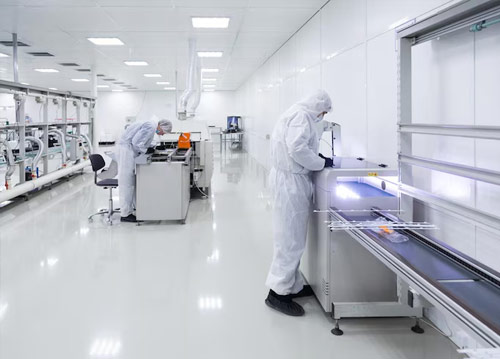
Cleanroom facilities operate in some of the most heavily regulated industries in the world, including pharmaceuticals, biotechnology, medical devices, and semiconductor manufacturing. In these environments, even minor deviations in air quality, material control, or documentation can lead to serious compliance issues, product failures, or regulatory penalties.
To manage these risks effectively, many organizations rely on integrated delivery models. A Turn-key Project for Clean Room provides a structured approach that combines design, engineering, construction, and validation into a single coordinated system. This integration plays a key role in ensuring that regulatory requirements are met consistently throughout the entire project lifecycle.
Built-In Compliance from the Design Stage
One of the most important advantages of turn-key cleanroom projects is that compliance is not treated as a final step. Instead, it is embedded into the design phase from the beginning.
Engineering teams analyze regulatory requirements early to ensure that all systems are designed in accordance with applicable standards.
Key compliance frameworks often considered include:
- ISO cleanroom classification standards
- Good Manufacturing Practice (GMP) guidelines
- FDA and EU regulatory expectations (for pharma environments)
- Industry-specific contamination control standards
By integrating these requirements into the design process, the risk of non-compliance during later stages is significantly reduced.
Integrated Engineering Reduces Compliance Gaps
Regulatory compliance depends heavily on how well different engineering systems work together. HVAC, electrical, structural, and process systems must all support controlled environmental conditions.
In traditional construction models, disconnected teams can lead to design inconsistencies. However, in a Turn-key Project for Clean Room, engineering disciplines are coordinated from the start.
This integrated approach helps ensure:
- Consistent airflow and pressure control across all zones
- Proper material selection for contamination prevention
- Accurate system sizing for HVAC and filtration units
- Alignment between design documentation and physical installation
This reduces the likelihood of compliance gaps caused by system mismatches.
Controlled Documentation and Traceability
Regulatory bodies require detailed documentation at every stage of cleanroom development. Turn-key projects simplify this process by maintaining centralized documentation control.
All project data is managed within a unified system, ensuring traceability from design to commissioning.
Typical documentation includes:
- Design approvals and engineering drawings
- Material certificates and supplier records
- Installation and inspection reports
- Testing and validation results
This structured documentation approach makes audits more efficient and transparent.
Validation Planning Integrated into the Project
Validation is a critical requirement for cleanroom certification. It ensures that the facility performs according to regulatory expectations before it becomes operational.
In turn-key projects, validation is not left until the end. Instead, it is planned during the early design phase to ensure systems are built for compliance from the start.
Validation activities typically include:
- Airflow pattern testing and verification
- Particle count and classification measurements
- Pressure differential monitoring between zones
- Temperature and humidity stability testing
- HEPA/ULPA filter efficiency checks
Early planning reduces the risk of failing validation tests and requiring costly redesigns.
Standardized Construction and Installation Practices
Construction quality plays a direct role in regulatory compliance. Poor installation practices can lead to leaks, contamination risks, or system inefficiencies.
Turn-key cleanroom delivery uses standardized construction procedures to ensure consistency and accuracy.
This includes:
- Controlled prefabrication of cleanroom components
- Strict installation protocols for HVAC and filtration systems
- Step-by-step inspection during assembly
- Quality checks at every installation stage
Standardization reduces variability and ensures that the facility aligns with approved design specifications.
Real-Time Monitoring and Environmental Control
Regulatory compliance does not end after construction. Cleanroom facilities must maintain continuous compliance during operation.
Modern turn-key cleanroom systems often include integrated monitoring systems that track environmental conditions in real time.
These systems monitor:
- Air particle levels
- Pressure differentials
- Temperature and humidity stability
- Airflow performance
Continuous monitoring ensures that any deviation from compliance standards is detected and corrected quickly.
Reduced Risk of Regulatory Failure
One of the biggest challenges in cleanroom projects is failing regulatory inspections due to design or execution errors. Turn-key models significantly reduce this risk by centralizing responsibility and ensuring consistent execution.
Risk reduction is achieved through:
- Early compliance integration in design
- Unified project management structure
- Continuous quality control processes
- Comprehensive validation procedures
This leads to higher success rates during regulatory audits and inspections.
Conclusion
Regulatory compliance is one of the most critical aspects of cleanroom development, and failure to meet standards can result in serious operational and financial consequences. A Turn-key Project for Clean Room provides a highly structured and integrated approach that ensures compliance is maintained at every stage of the project.
By combining early-stage planning, integrated engineering, controlled documentation, and rigorous validation, turn-key cleanroom solutions offer a reliable pathway to achieving and maintaining full regulatory compliance in highly controlled industries.
