Picture a pipeline crew out on a remote site at 7 am. A row of rusted flange bolts. No power socket for miles, no air compressor on the truck. One fitter is already hanging off a long bar with their full body weight, and the nut still won’t budge.
Jobs like this burn hours and wear people out. Someone usually ends up with a cheater pipe on the end of a spanner, which is how bolts get snapped and backs get hurt. Mechanical torque multipliers are a pretty simple fix for a lot of it.
The basic idea of Mechanical Torque Multipliers
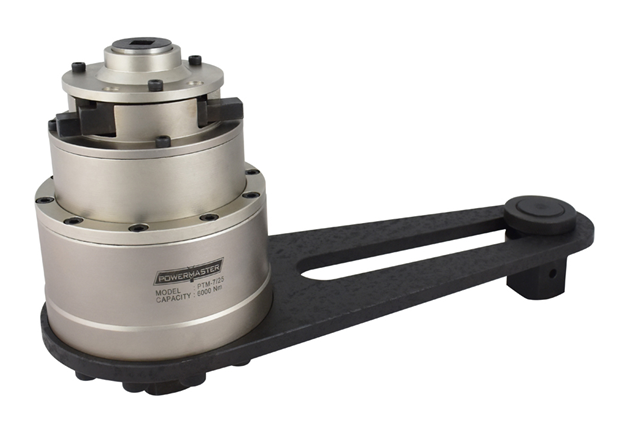
A mechanical torque multiplier is a gearbox in a steel case. You fit a socket on the output side and put a normal hand torque wrench into the input side. A reaction arm braces against a nearby nut or a solid part of the flange, so the tool can’t spin back at you.
Then you just turn the hand wrench. The gears inside multiply that effort, often several times over, and send it to the bolt. You pull with your arm, the multiplier does the heavy lifting, and the nut moves.
It’s a bit like riding a bicycle in a low gear up a hill. You’re still pedalling, but the gears make the climb possible.
Why crews like them?
Honestly, the big draw is that they don’t need anything plugged in. No pump, no hoses, no generator. That makes them handy on offshore platforms, wind turbines, pipelines and any site where carrying a full hydraulic set is more trouble than it’s worth.
They’re also accurate. Because the gear ratio is fixed, you can work out the output torque from what you set on the hand wrench. So you’re not guessing the way you are with a long bar. And they’re quiet, fairly compact and don’t cost much to keep running.
The trade-off is speed. On a big job with hundreds of bolts, turning by hand gets slow, and that’s when powered tools start to make more sense.
Where torque multipliers in general fit
You’ll hear people say “mechanical multiplier” and “torque multipliers” as if they’re the same thing. They’re close. The mechanical type is the hand-turned one. But the wider family also includes pneumatic, electric and battery versions, which use the same gearbox idea with a motor doing the turning. Those suit repetitive work where the crew needs to get through a lot of bolts fast.
A few things to check before you buy
Start with the highest torque your bolts need, and pick a multiplier that covers it with some room to spare. Check the gear ratio too, because it tells you how much effort goes in for what comes out. Look at the reaction arm and make sure it fits the spaces you actually work in. And ask whether the tool comes with a calibration certificate, since your torque figures are only as good as that.
Conclusion
Mechanical torque multipliers give one person serious bolting force with no power supply and very little kit. When the job gets bigger, powered torque multipliers take over the same work faster.
If you’re looking for one, have a look at POWERMASTER. It makes mechanical multipliers alongside a full range of bolting tools, and it offers training, calibration and repairs too. Its products are used in more than 120 countries.
